What Is the Red Data Book? A Complete Beginner’s Guide
The Red Data Book keeps a record of all the plants and animals at risk of disappearing forever. It lists species by how close they are to extinction. Some species on the list are doing fine. Others are already gone. Scientists, governments, and conservation groups use this book to decide which species need help first.
This guide explains what the Red Data Book is, how it works, and why it matters.
What Is the Red Data Book?
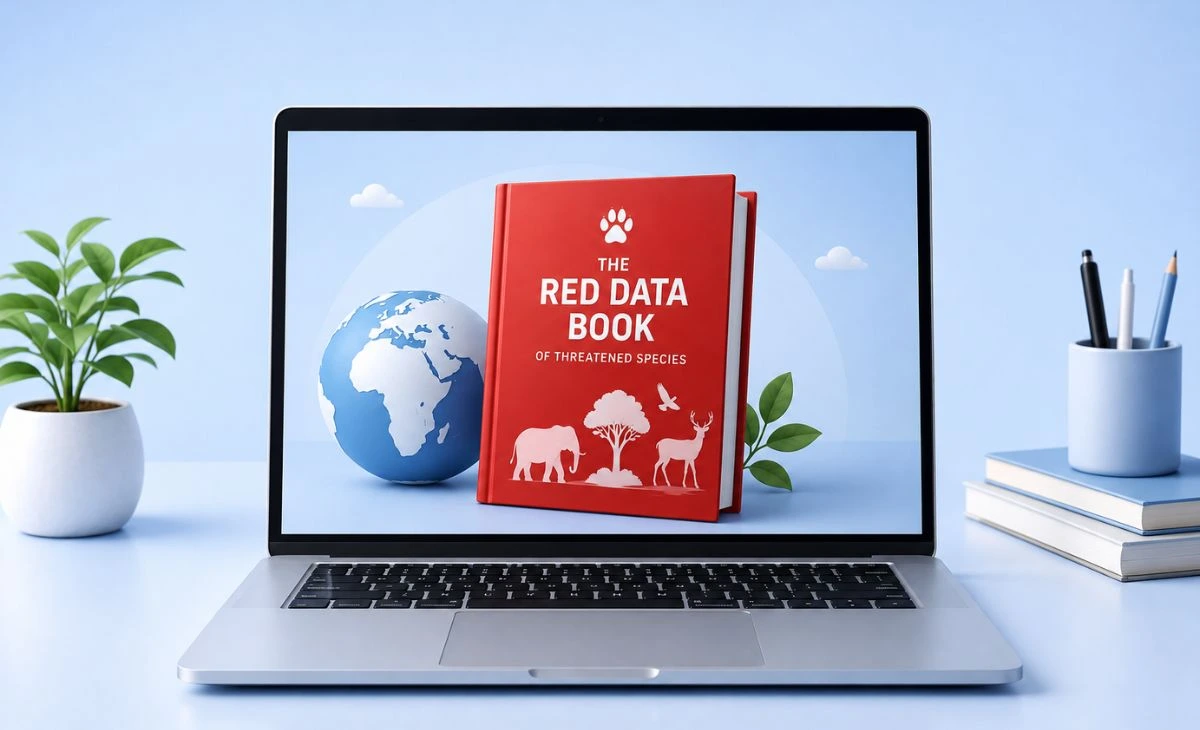
The Red Data Book is an official record of threatened and endangered species. The International Union for Conservation of Nature, known as IUCN, created it. Most people now call it the “Red List,” though many still search for it as the Red Data Book.
The book doesn’t just say “this animal is rare.” It sorts every species into a clear risk category. This is based on real data, like population size, habitat loss, and how fast numbers are dropping.
Many countries also publish their own Red Data Books. India, for example, has its own version. It covers species found within its borders. These national books work alongside the global one. They give a closer look at local threats.
What Does the Red Data Book Actually Record?
Each entry in the Red Data Book usually includes:
- Current population numbers, and whether they’re rising, falling, or holding steady
- Where the species lives, including its habitat and range
- Major threats it faces, like hunting, habitat loss, or climate change
- Its risk category, which shows how close it is to extinction
- Conservation efforts, past or ongoing, if any exist
This makes the Red Data Book more than a list. It’s a working record. Conservationists use it to plan real protection efforts.
The Risk Categories, Explained Simply
The IUCN sorts species by extinction risk. Here’s what each category means.
Least Concern: The species is widespread and stable. Most animals and plants fall into this group.
Near Threatened: The species might become at risk soon if current trends continue.
Vulnerable: The species faces a real risk of extinction in the wild.
Endangered: The species faces a very high risk of extinction soon.
Critically Endangered: The risk of extinction is extremely high. This is the last step before the species is gone from the wild.
Extinct in the Wild: The species only survives in captivity, like zoos or breeding programs.
Extinct: No individuals of the species remain anywhere.
There’s also a Data Deficient category. This doesn’t mean a species is safe. It just means there isn’t enough data yet.
How Does the Red Data Book Help Protect Biodiversity?
The Red Data Book plays a direct role in protecting biodiversity. Here’s how.
It guides funding: Conservation budgets are limited. The book helps governments decide which species need help first.
It supports laws: Many countries base wildlife laws on Red Data Book categories. An Endangered species often gets stronger legal protection than a Least Concern one.
It tracks change: The book gets updated often. This shows if conservation work is paying off. A move from Critically Endangered to Endangered means real progress.
It raises awareness: A clear, official list helps the public and media see which species need attention. That awareness often brings more support.
It helps prevent extinction: Flagging species early gives conservationists more time to act, before a species reaches Critically Endangered status.
Who Uses the Red Data Book?
The Red Data Book isn’t just for scientists. Many groups use it:
- Governments, to write and enforce wildlife protection laws
- Conservation organizations, to plan where to focus their efforts
- Researchers, to study population trends and threats
- Students and educators, to learn about biodiversity and conservation. Many end up pulling academic papers on endangered species from research platforms like Academia.edu — a guide on downloading Academia.edu papers as PDF can save time here if you’re gathering sources for a school or college project
- Businesses, especially in construction or farming, to check if a project affects a protected species
Why the Red Data Book Matters
Biodiversity loss doesn’t always make headlines. A species can quietly disappear over decades. The Red Data Book exists to stop that from happening unnoticed.
An official, updated record turns a slow, hidden problem into something measurable. You can’t protect what you don’t track. Once a species is documented, it’s harder to ignore.
Final Thoughts
The Red Data Book is one of the most useful tools in modern conservation. It doesn’t just record which species are at risk. It gives everyone a clear, shared picture of how urgent each case is. As habitats shrink and climates shift, a record like this only gets more valuable. Understanding how it works is a solid first step into conservation as a whole.
For more guides like this one, browse the SelfDownloader blog.
FAQ
What is the Red Data Book?
The Red Data Book is an official record of species at risk of extinction. It sorts species into categories based on how close they are to disappearing, using data on population, habitat, and threats.
How does the Red Data Book help protect biodiversity?
It helps direct conservation funding, supports wildlife protection laws, tracks population changes over time, and raises public awareness about species that need urgent help.
Who created the Red Data Book?
The most widely used version comes from the International Union for Conservation of Nature (IUCN). Many countries also publish their own national Red Data Books.
What’s the difference between Endangered and Critically Endangered?
Endangered means a species faces a very high risk of extinction soon. Critically Endangered means the risk is even higher. It’s the last stage before a species goes extinct in the wild.
Is a Data Deficient species considered safe?
No. Data Deficient just means there isn’t enough information yet to judge the species’ risk level. It’s not the same as being marked safe.