What Is a Silent Scroller on Social Media?
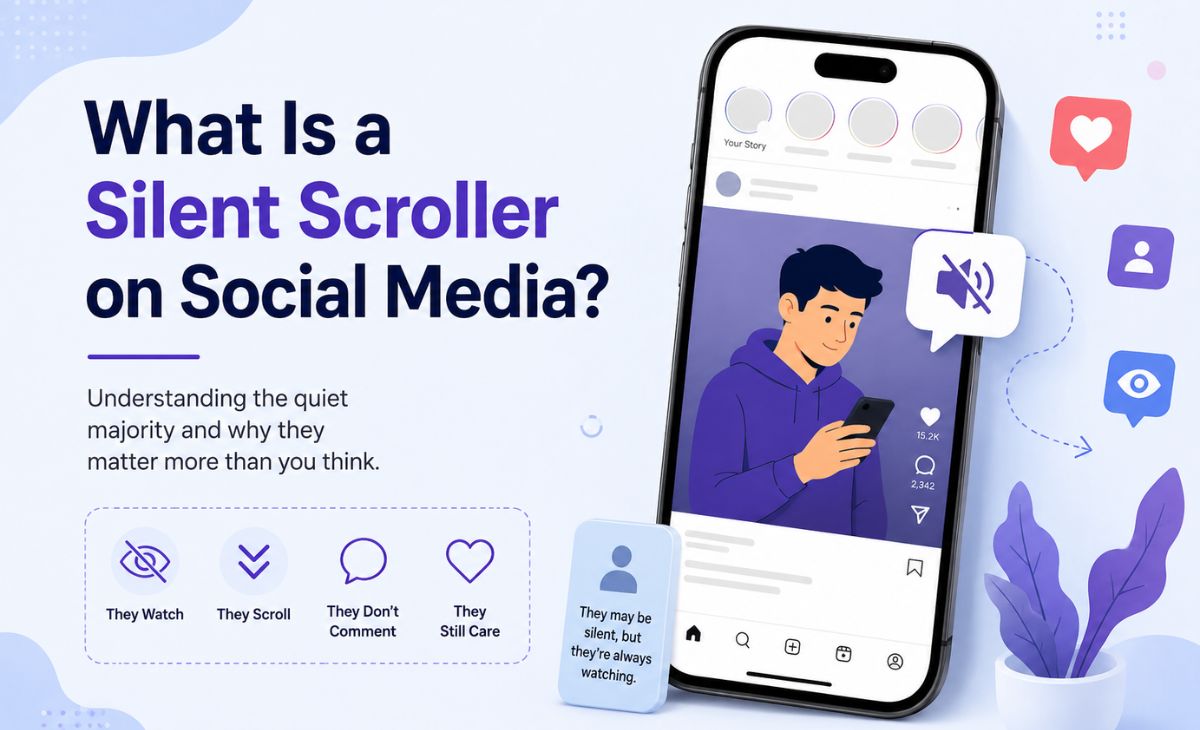
A silent scroller is someone who actively browses social media but rarely likes, comments, shares, or posts. They still watch videos, read captions, and follow trends. They just don’t leave a visible trace. Studies on online communities have long shown that most social media users fall into this group. People often call them “lurkers.” Only a small share of users account for most visible engagement.
What Defines a Silent Scroller
The core trait is simple: consumption without visible interaction. A silent scroller opens an app. They scroll through the feed. They watch or read content, then close the app again. No like, no comment, no sharing.
A few patterns show up consistently in how this plays out:
- High frequency, low interaction: They may check social media several times a day. They rarely engage publicly, though.
- Selective attention: They stop on content that grabs them personally. Then they keep moving.
- Private engagement instead of public engagement: Saving a post, sending it to a friend privately, or acting on a recommendation all count as real engagement. It’s just invisible in public metrics.
- Consistent across platforms: The same behavior shows up on Instagram, TikTok, Facebook, X, and LinkedIn. The reasons can shift slightly by platform, though.
None of this means someone is disengaged. It just means their engagement doesn’t show up in likes and comments.
Why This Behavior Happens
There isn’t one single reason people scroll silently. It’s worth being careful not to assume too much about any one person’s motivations, too. A few general patterns come up across research and platform behavior studies:
- Public posting carries more weight than passive viewing. Commenting or sharing puts something on the record, tied to your name. Scrolling doesn’t do that.
- Content volume encourages fast consumption. Feeds are endless now. Many people move through content fast and just don’t stop to interact with most of it.
- Some platforms are built around content discovery, not conversation. TikTok and Instagram Reels, for example, are built for fast, passive watching. Commenting isn’t the main interaction the format encourages.
- Privacy preferences vary widely. Some people are simply more comfortable consuming quietly than participating publicly. There are all kinds of personal reasons for this, and none of them need explaining.
- None of these explanations are about a person’s personality or mental state. They’re mostly a mix of platform design and normal, everyday choices. People decide what to share and what to keep private, that’s all.
How to Recognize Silent Scroller Behavior in Practice
For creators and brands, silent scrolling usually shows up as a gap. Reach is high, but visible engagement is low. A post might get thousands of views but very few likes or comments. That gap often means a large silent audience, not failed content.
A few real signals to look for:
- High view counts with low interaction rates. This shows up most on video content.
- Steady follower growth, even with little comment activity
- Spikes in saves or shares, without a matching spike in comments
- Repeat viewers or return visits. Analytics can show this, even without any public engagement.
Platforms now surface more of this hidden activity. Save counts, watch-time data, and link clicks can all reveal an active silent audience. Comment counts alone would miss it.
What This Means for Marketers and Everyday Users
For marketers and content creators, the takeaway is simple: don’t judge content purely by likes and comments. A post with quiet numbers might still reach and influence a large audience that just isn’t commenting. Watch time, saves, click-throughs, and follower growth over time tell a fuller story than public engagement alone.
For everyday users, there’s nothing wrong with being a silent scroller. Consuming content without publicly reacting is a normal way to use social media. It doesn’t need justification. If you do want to show up more, try small steps first — like here, a short comment there. That feels far less pressured than trying to become a highly visible poster overnight.
Final Thoughts
Silent scrollers make up a large share of every social platform’s audience. Their activity rarely shows up in public metrics, though. Understanding this helps explain why reach and engagement numbers don’t always match. It also shows why content can have real impact without visible comments or shares. Whether you manage a brand’s content or just use social media your own way, silent scrolling is a normal, common habit, not a gap that needs fixing.
FAQ
What is a silent scroller on social media?
A silent scroller is someone who actively browses and consumes social media content — watching videos, reading posts — without publicly liking, commenting, or sharing.
Is silent scrolling the same as being a lurker?
Yes, largely. “Lurker” is the older, more general term for the same behavior — using an online platform without publicly participating.
Does silent scrolling mean someone isn’t really engaged?
No. Silent scrollers often engage privately, through saves, private shares, or acting on what they see. None of that shows up in public metrics like likes or comments, though.
How can brands reach silent scrollers if they don’t comment?
Focus on content that holds attention and encourages saves or shares. Track metrics like watch time and save rate alongside likes and comments. Those numbers better reflect a silent audience’s activity.
Is it bad to be a silent scroller?
No. It’s a completely normal way to use social media. Public engagement is optional, not a requirement for healthily using these platforms.