
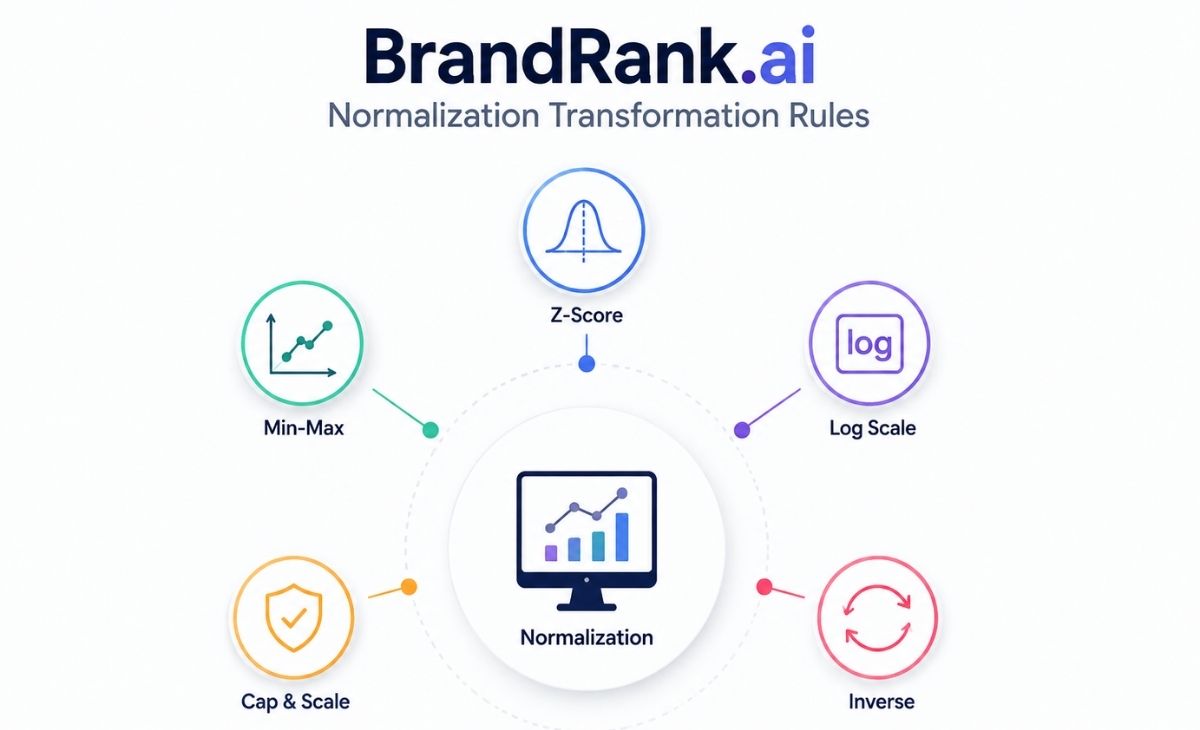
BrandRank.ai Normalization Transformation Rules, Explained
BrandRank.ai normalization transformation rules describe the process of cleaning up messy brand data. Think different spellings, formats, or mentions of a company. The goal: help AI tools, like ChatGPT, Gemini, or Perplexity, see a brand as one clear entity, not several mixed-up versions. One thing worth saying upfront: this exact phrase isn’t an official published standard from BrandRank.ai. It’s become industry shorthand instead, used across several sites to describe a real, practical process. This guide covers what that process involves.
What BrandRank.ai Actually Is
BrandRank.ai is a real AI visibility platform. It tracks how brands show up in answers from tools like ChatGPT, Gemini, Claude, and Perplexity. It scores brands on visibility, content readiness, and risk. Many global brands use it to check how well they get represented when someone asks an AI tool about their industry.
This context matters. It explains why terms like “normalization” and “transformation” come up so often around the platform. More people now ask AI tools directly for brand recommendations, instead of scrolling through search results themselves. How cleanly a brand’s data holds together across the internet has started to matter. It affects whether AI systems cite that brand accurately, or at all.
The Core Concept: Normalization vs. Transformation
Even though “BrandRank.ai normalization transformation rules” isn’t one single official document, the idea behind it is real. It gets used widely across data and SEO work, not just by one platform.
Normalization means taking every different version of the same information and mapping it back to one standard, official form. A business might show up online as “BrandRank AI,” “Brand Rank,” and “brandrank.ai.” Normalization settles on one version as the official form. It treats the rest as known aliases pointing back to it.
Transformation means turning raw, messy info into organized data a business can measure. Think a customer review, a chunk of text, or an AI-generated answer. This step often pulls out fields like sentiment, which brand got named, the topic, and where the mention came from.
Put together, these two steps take messy brand data and turn it into something clean. Both humans and AI systems can then read it the same way.
Why This Matters for AI Visibility
There’s a real gap between showing up in a search result and being cited inside an AI-generated answer. A brand can be findable online. But it might never earn enough trust for an AI model to reference it directly.
Say a brand’s founding year, product names, or address don’t match from one listing to the next. Then an AI model has no single, clean source to cite. It either picks whichever version shows up most often, or it skips the brand entirely, rather than risk citing something wrong.
This is the real reason clean, normalized brand data has started mattering more. It’s not about tricking an AI system. It’s about giving it a clear, steady picture, instead of a pile of conflicting fragments.
What Normalization and Transformation Typically Cover
This process usually covers a few recurring areas:
- Brand name variations: Think punctuation, spelling, capital letters, and short forms.
- URL and website standardization: This covers consistent formatting and proper redirects for old or duplicate URLs.
- Address and location details: This removes messy formatting, like extra suite numbers or old addresses.
- Product and service naming: This keeps titles consistent across different listings and mentions.
- Sentiment and topic tagging: This turns loose mentions into measurable, categorized data.
A Practical Limitation Worth Knowing
Clean, normalized data doesn’t guarantee a citation. What it does is give the AI model a clearer picture to work from. Whether a brand actually gets cited still depends on other things too. Think relevance to the question, how deep the content is, and how trusted the sources are.
It’s also worth being careful with rigid, no-exception rules. Some brands break standard formatting on purpose, like “iPhone” or “eBay.” A process that “fixes” these without exception ends up breaking something that was never broken. Good data practices keep the original raw record too, next to the normalized version. That way, you can check or undo mistakes later.
Final Thoughts
This term may or may not be an official, documented framework. Either way, the idea behind it is real. It’s worth taking seriously too. Brands with clean, steady data across the web are simply easier for AI systems to spot and cite right. More people now rely on AI-generated answers instead of normal search results. Treating brand data as a real priority, not just a back-office chore, will likely matter more over time, not less.
FAQ
Is “BrandRank.ai normalization transformation rules” an official term from BrandRank.ai?
Not exactly. BrandRank.ai is a real AI visibility platform. But this specific phrase isn’t a published technical standard from the company. It’s become a shorthand term used across several sites to describe general brand data normalization work.
What’s the difference between normalization and transformation?
Normalization makes different versions of the same info match. It maps them back to one standard form. Transformation turns raw, messy content into organized data you can measure.
Does clean brand data guarantee AI citations?
No. Clean, normalized data gives AI systems a clearer picture to work from. But citation still depends on relevance, content quality, and how trusted the source is. Normalization improves your odds. It doesn’t guarantee anything.
Why do AI tools sometimes skip mentioning a brand entirely?
This often happens when a brand’s info is inconsistent across the web. The AI system has no single, solid source to cite. Rather than risk citing something wrong, some models just leave the brand out.
Should normalization rules apply to every brand name variation without exception?
No. Some brands use unusual formatting on purpose, like “iPhone” or “eBay.” A rigid rule set can wrongly “fix” these. Good normalization work leaves room for exceptions.