How to Plan a Social Media Campaign That Actually Works
A social media campaign is a focused set of posts, ads, or content built around one clear goal. It runs over a set period of time, rather than regular day-to-day posting. Think of a product launch push, a seasonal promotion, or a brand awareness effort tied to one event. The difference between a campaign that works and one that fades out fast usually comes down to setup, not creativity.
This guide walks through what a solid campaign actually involves, step by step. It also covers the mistakes that trip up most first attempts.
What a Social Media Campaign Actually Means in Practice
A campaign isn’t just “posting more for a while.” It has a clear start date, a clear end date, a specific goal, and a way to measure whether that goal got hit. Regular content keeps a brand present day to day. A campaign pushes toward one outcome instead — more sign-ups, more sales, more awareness around a launch — within a set window of time.
Most campaigns combine a few elements: organic posts, sometimes paid ads, often a hashtag or theme that ties everything together, and a clear call to action. What separates a strong campaign from a weak one usually comes down to focus. Everything should connect back to one goal, instead of trying to do five things at once.
Setting Up a Campaign the Right Way
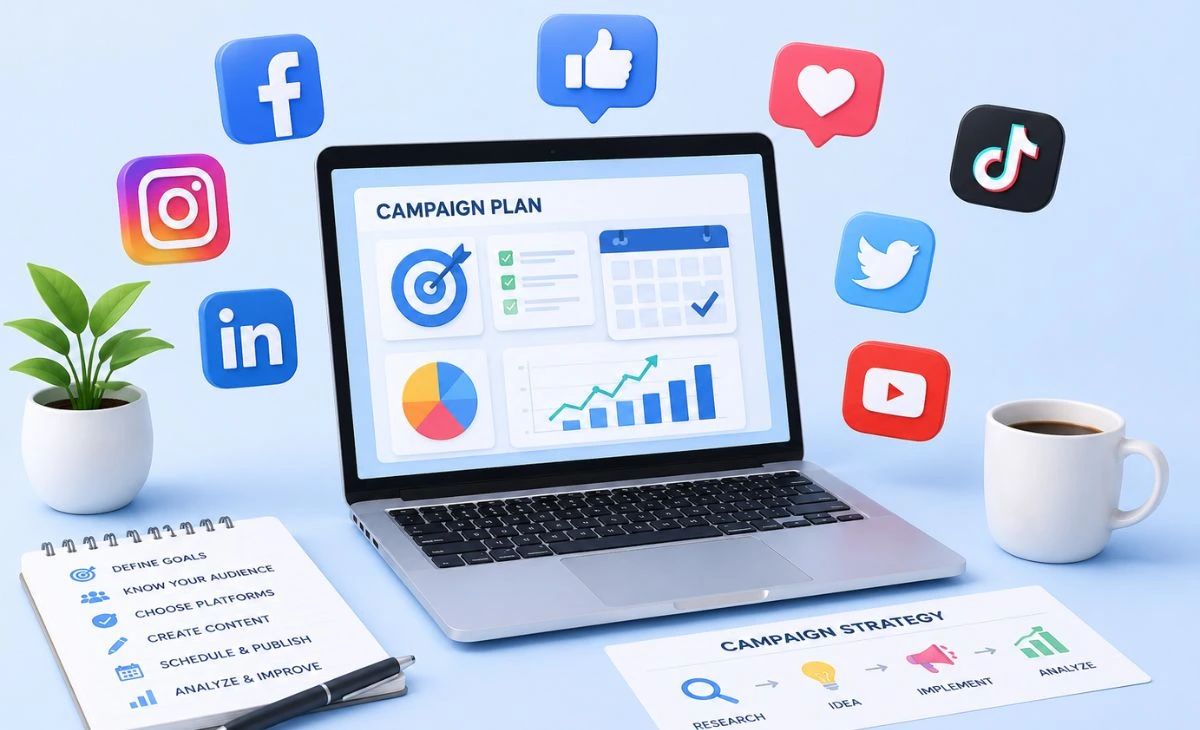
Getting the setup right early saves far more time than fixing problems mid-campaign. A solid setup covers a few things, all before a single post goes live.
1. Pick one primary goal: Awareness, sign-ups, sales, and engagement each need slightly different content and different ways of measuring success. Chase all of them at once, and you usually end up hitting none of them clearly.
2. Define your audience for this specific campaign: It might be narrower than your usual audience. Think of existing customers for a loyalty push, or a new segment for a product launch.
3. Set measurable targets before you start: Pick a number to hit, not just “get more engagement.” This makes it possible to actually judge whether the campaign worked.
4. Build a content calendar for the full run: Map out what posts go out, and when, before launch. Don’t create content day by day once the campaign is already live.
5. Set up tracking properly: UTM links, platform analytics, and conversion tracking (if sales or sign-ups are the goal) all need to be in place before launch. Don’t add these afterward.
Getting this setup stage right matters a lot. It’s what separates a campaign you can actually measure and improve from one that just generates activity with no clear result.
Monitoring and Listening During a Campaign
A campaign doesn’t run on autopilot once it’s live. Watch how people talk about it. Search relevant hashtags and mentions. Track comments across platforms. This lets you catch problems early and spot what’s resonating. This kind of ongoing search and listening also surfaces content worth reposting. It flags negative reactions early too, before they spread further.
Check in daily during an active campaign, not just at the end. This gives you room to adjust. You can swap out underperforming creative, double down on what’s working, or respond quickly if something needs addressing.
A Real-World Example Scenario
Say a small skincare brand is launching a new product. The goal: 500 pre-orders in two weeks. The audience: existing email subscribers, plus lookalike audiences on Instagram and TikTok.
The setup includes a content calendar with 10 organic posts and three short-form videos. There’s a small paid ad budget too, aimed specifically at the lookalike audience. A unique tracking link goes in every post and ad. That way, pre-orders can be traced back to exactly which content drove them.
Halfway through, the team checks the numbers. TikTok content is driving three times the click-through rate of Instagram posts. So they shift more of the remaining content and ad budget toward TikTok for week two. By the end, they hit 540 pre-orders, over target. They know exactly which content did the heavy lifting too, because the tracking was set up correctly from day one.
Common Pitfalls in Social Media Sponsorship
Many campaigns include a sponsorship or influencer component. This is where a lot of budget gets wasted. A few problems show up again and again:
- Picking influencers by follower count alone: A smaller creator with an engaged, relevant audience often outperforms a bigger name with passive followers.
- Vague briefs. Handing over a product with no clear message or goal leads to content that never connects back to the campaign.
- No usage rights agreed in advance: If you want to repost the content, or run it as an ad later, that needs to be part of the contract. Don’t just assume it.
- Skipping a disclosure requirement: Sponsored content needs to be clearly marked as such. Skip this, and you risk legal trouble and damaged trust with the audience.
- Treating the partnership as one-off instead of ongoing: Creators who work with a brand more than once, and actually understand the product, tend to make content that performs better than a single rushed post.
Common Mistakes to Avoid Overall
- Launching without a tracking setup: You can’t fix what you can’t measure. Add tracking after launch, and you lose data from the most important early days.
- Spreading the budget too thin across every platform: You’ll usually get better results from doing two platforms well than five platforms poorly.
- Ignoring early performance signals: A campaign that never gets adjusted mid-run often ends the same way it started, even when the data clearly shows what needs to change.
- No clear end point: Without a set end date, campaigns tend to fade out slowly instead of wrapping up with a clear result to judge.
Final Thoughts
A social media campaign that works isn’t about having the most creative idea in the room. It’s about clear goals, proper setup before launch, active monitoring while it runs, and adjusting based on real numbers instead of assumptions. Get those fundamentals right, and even a modest budget can outperform a much bigger one that skipped the setup stage.
FAQ
What’s the difference between a social media campaign and regular posting?
A campaign has a defined start and end date, one specific goal, and measurable targets. Regular posting keeps a brand visible day to day without that same tight structure or single outcome to hit.
How long should a social media campaign run?
It depends on the goal, but most campaigns run somewhere between one and six weeks. Shorter campaigns work well for product launches or promotions; longer ones suit broader awareness goals.
What should be set up before a campaign launches?
A clear goal, defined audience, measurable targets, a full content calendar, and tracking (like UTM links or conversion tracking) should all be in place before the first post goes live.
How do I avoid common sponsorship mistakes in a campaign?
Choose creators based on audience relevance and engagement, not just follower count. Set a clear brief, agree on usage rights upfront, and make sure sponsored content is properly disclosed.
How do I know if a social media campaign worked?
Compare the final results against the measurable targets set before launch. Proper tracking makes this possible — without it, you’re left guessing which posts actually drove results.